


A potential customer has found your business, probably between jobs, on a lunch break or while comparing a few local options. They will decide quickly whether you look established, understand their problem and are easy to contact. That is why the question, what should a sole trader website include, is less about adding pages and more about removing doubt.
For most sole traders, a website has one commercial job: help the right person take the next step. It should show what you do, who you help, why you are credible and how to get in touch - without making visitors work for the answers.
What should a sole trader website include first?
Start with clarity, not decoration. A polished website is valuable, but it cannot compensate for vague messaging or an unclear customer journey. Your most important information should be visible within seconds of landing on the site.
A clear statement of what you do
Your homepage needs a plain-English headline that names your service and, where relevant, your location or the type of customer you serve. “High-quality solutions” says nothing. “Domestic electrician serving Leeds and surrounding areas” tells a visitor immediately whether they are in the right place.
Follow this with a short explanation of the result you provide. A business coach may help founders make clearer decisions. A photographer may create relaxed family portraits. A plumber may solve urgent repairs and complete planned installations. Describe the outcome customers care about, not only the task you perform.
Avoid trying to serve everybody in one sentence. If you work with homeowners, small businesses or a particular sector, say so. Specific language can make a smaller business look more confident, not more limited.
Services that are easy to understand
Visitors should not have to email you simply to work out what you offer. Give each core service a short, practical description covering what is included, who it suits and the likely next step.
A sole trader with two or three main services can explain them well on one services page. If you offer several distinct services, individual pages are usually more useful. They give prospective customers the detail they need and help search engines understand what your business is relevant for.
Do not overload every page with every possible variation. Focus on the work you want more of. If a service is unprofitable, rare or no longer offered, it does not need prominent space on your website.
A visible way to make contact
A website that generates no action is an online brochure, not a business tool. Put a clear call to action near the top of the homepage and repeat it where a visitor is likely to be ready to enquire.
Depending on your business, that action might be “Request a quote”, “Book a consultation”, “Call now” or “Check availability”. It should match the way customers normally buy from you. A tradesperson dealing with urgent work may benefit from a prominent phone number. A consultant may need a short enquiry form that gathers enough detail before arranging a call.
Keep forms brief. Name, contact details and a simple message are often enough. Asking for a full brief, budget, address, preferred dates and several attachments at the first point of contact can reduce enquiries. You can gather more information once a genuine lead responds.
Build trust before asking for the enquiry
Sole traders often compete with larger firms that have bigger teams and bigger marketing budgets. Your advantage is direct expertise, personal service and accountability. Your website should make those strengths easy to see.
A credible About page
People are hiring a person, not an anonymous logo. An About page should explain who you are, your experience and the approach customers can expect. Use a professional, current photograph where possible. It gives the business a face and reassures visitors that there is a real individual behind the service.
You do not need to tell your whole career story. Share the details that support a buying decision: qualifications, relevant background, years in the trade, specialist knowledge or the reason you focus on this type of work. Keep the emphasis on how that experience benefits the customer.
Testimonials, reviews and proof of work
A strong recommendation from a real customer often does more than another paragraph of sales copy. Include a selection of specific testimonials that mention the service, the experience and the result. “Great service” is positive, but “arrived when promised, explained the options clearly and completed the work neatly” is much more convincing.
For visual or project-based businesses, add a portfolio, case studies or before-and-after examples. A short case study can explain the customer’s original issue, the work completed and the outcome. This is particularly helpful when your service is not immediately obvious from a photograph alone.
Only use genuine reviews and work you can stand behind. Stock images are acceptable in small doses, but too many generic photographs can make a personal business feel less believable. Real photos of your work, team members or local setting are usually stronger.
Qualifications, memberships and practical assurances
Relevant accreditations, insurance details, guarantees and professional memberships can reduce perceived risk. They matter most where customers are inviting you into their home, trusting you with money, or relying on specialist advice.
Use these details carefully. A wall of badges without explanation can feel decorative. Instead, place the most relevant assurance near the related service or contact point. If you are insured, qualified or certified, explain briefly what that means for the customer.
The pages most sole traders need
A simple site often performs better than a large one that is hard to maintain. For many independent businesses, five core areas are enough: a homepage, services, about, evidence of your work and contact. The exact structure depends on how customers find and choose you.
Local businesses should also make their service area clear. Mention towns, neighbourhoods or counties naturally where relevant, especially on service pages and your contact page. Do not create repetitive pages for every nearby location with almost identical wording. Useful local information is more persuasive than a long list of place names.
If you sell appointments, courses, products or consultations, a booking or purchasing route may be appropriate. But only add functionality that makes life easier for your customers and for you. An online booking system is helpful when availability changes regularly and customers expect to self-serve. For bespoke, high-value work, an enquiry-first approach may lead to better conversations.
The practical details that protect your business
Trust is not only built through design and testimonials. Basic business information tells visitors that you operate professionally.
Your website should show a reliable contact method, your trading name and, where appropriate, your business address or service area. If you collect information through forms, use cookies or send marketing emails, you will also need clear privacy information and consent processes that reflect how you actually handle data. If your business is VAT registered, show the required details where relevant.
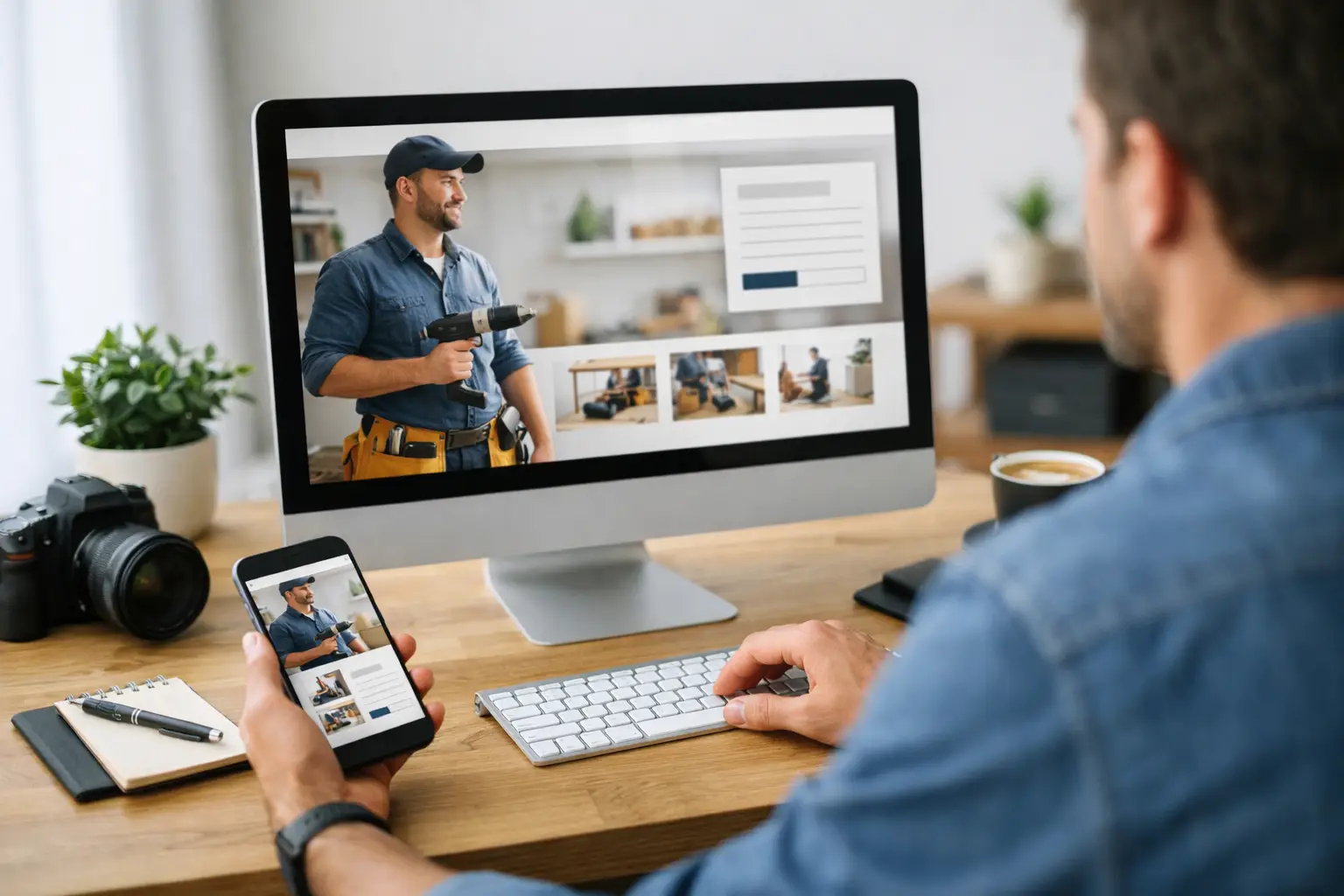
Make sure the site works properly on mobile phones. Many local searches happen on a phone, and a customer should be able to read your services, tap to call and send an enquiry without pinching, zooming or waiting for slow pages to load. Good mobile performance is not an optional extra.
Accessibility matters too. Use readable text, clear contrast, descriptive buttons and sensible page structure. These choices help more people use the site and usually make it easier for every visitor to find what they need.
What to leave out
More content is not automatically better. Long mission statements, vague slogans, autoplay videos and cluttered pop-ups can distract from the action you want a visitor to take. The same applies to outdated news sections, old offers and social media feeds that have not been updated for months.
Be cautious with price lists. Transparent pricing can help when services are standardised, such as fixed cleaning packages or set consultation sessions. For customised work, publishing a starting price or explaining the factors that affect cost may be more useful than presenting figures that do not fit the job.
You also do not need to explain every technical detail of your process. Give customers enough information to feel confident, then make the next step simple.
Turn the website into a working sales tool
Before launching, test the site as if you were a new customer. Can you tell what the business does in five seconds? Can you find the relevant service, proof of quality and contact option without scrolling endlessly? Does the enquiry form arrive in the right inbox, and can you respond promptly?
A website is not finished because it is published. Review it when your services change, new testimonials arrive or customers repeatedly ask the same question. Those questions often reveal the information your site is missing.
For sole traders who need momentum rather than a drawn-out web project, WEBSOS provides a professional first website draft within seven days. The useful outcome is not simply a newer design. It is a clear, credible online presence that gives prospective customers a reason to contact you while they are ready to act.